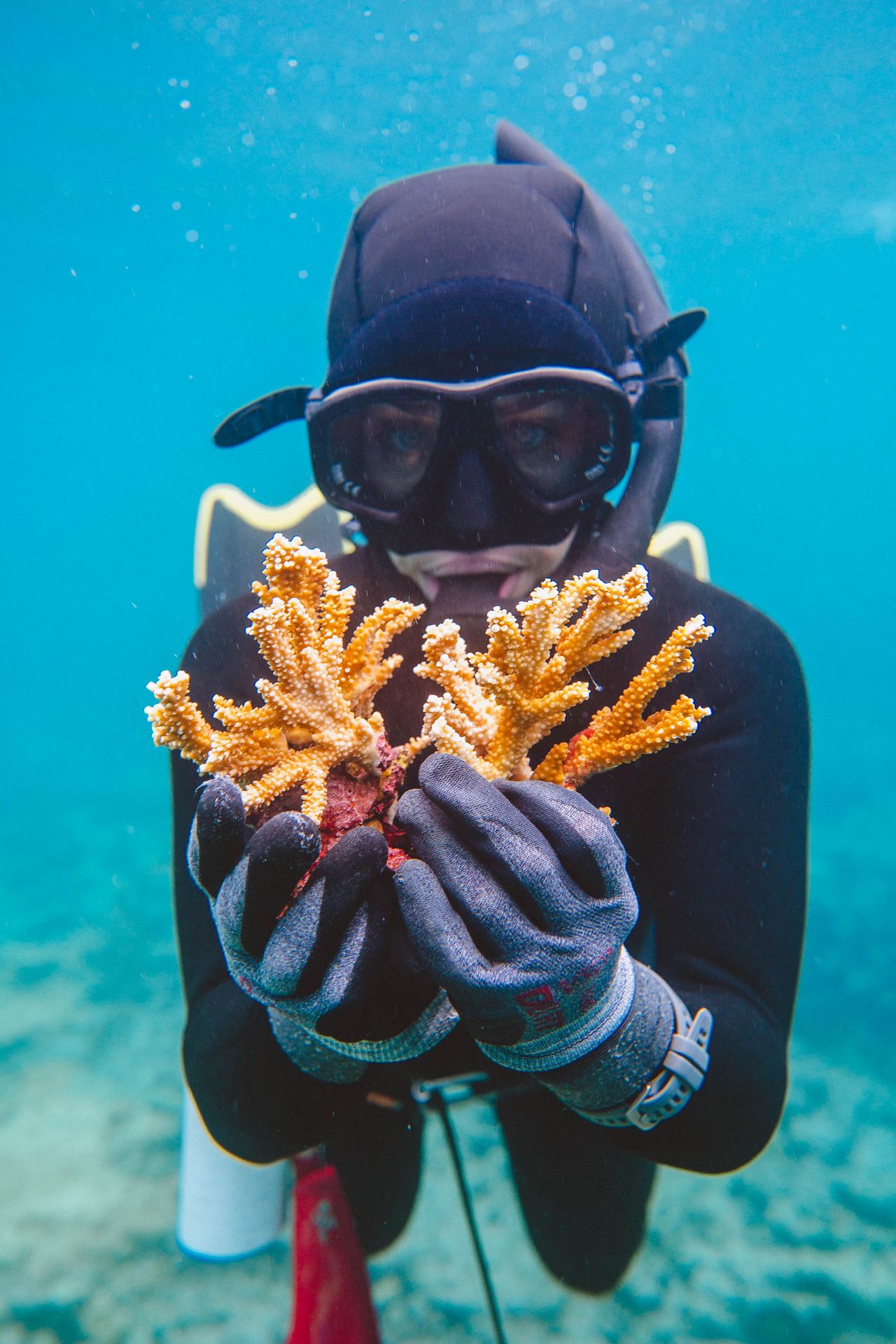
Antigua is known for its 365 beaches, with turquoise waters, white sand, and stunning coastal scenery drawing visitors from around the world. But beyond the beaches, the waters surrounding the island are home to coral reefs that support marine life and play an important role in the health of its coastal ecosystems. In Antigua and Barbuda, one nonprofit is working to protect and restore these reefs so they can continue to support the island for generations to come.
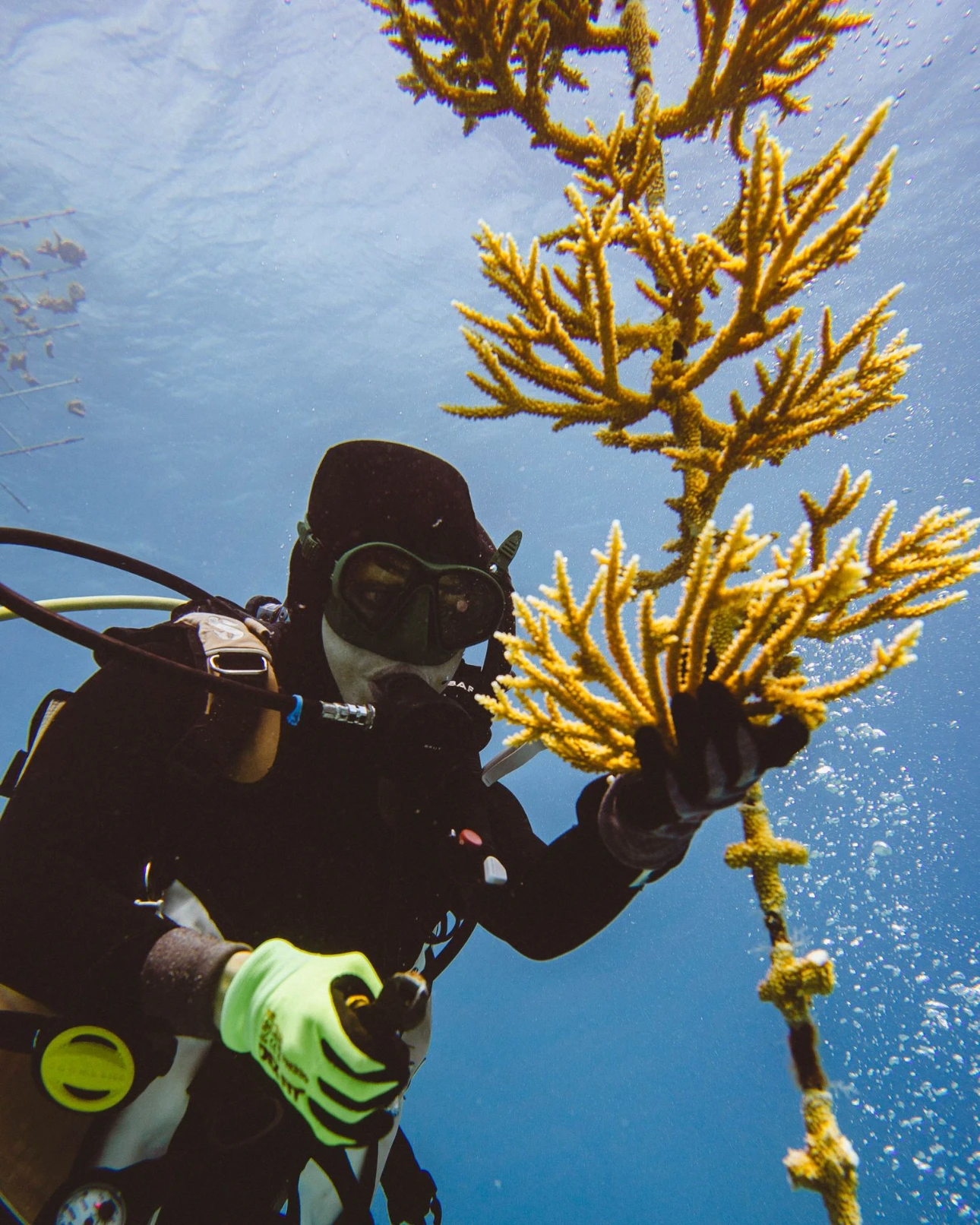
Image caption: Taking fragments from nursery ropes.
That organization is AnuBlue. Formerly known as Elkhorn Marine Conservancy, the organization recently changed its name to reflect the broader range of conservation efforts and programs they now support. While its work has expanded, its commitment to coral reef restoration continues to grow. We spoke with Shannon Costelloe, who leads AnuBlue’s communications and still gets in the water to outplant coral herself.
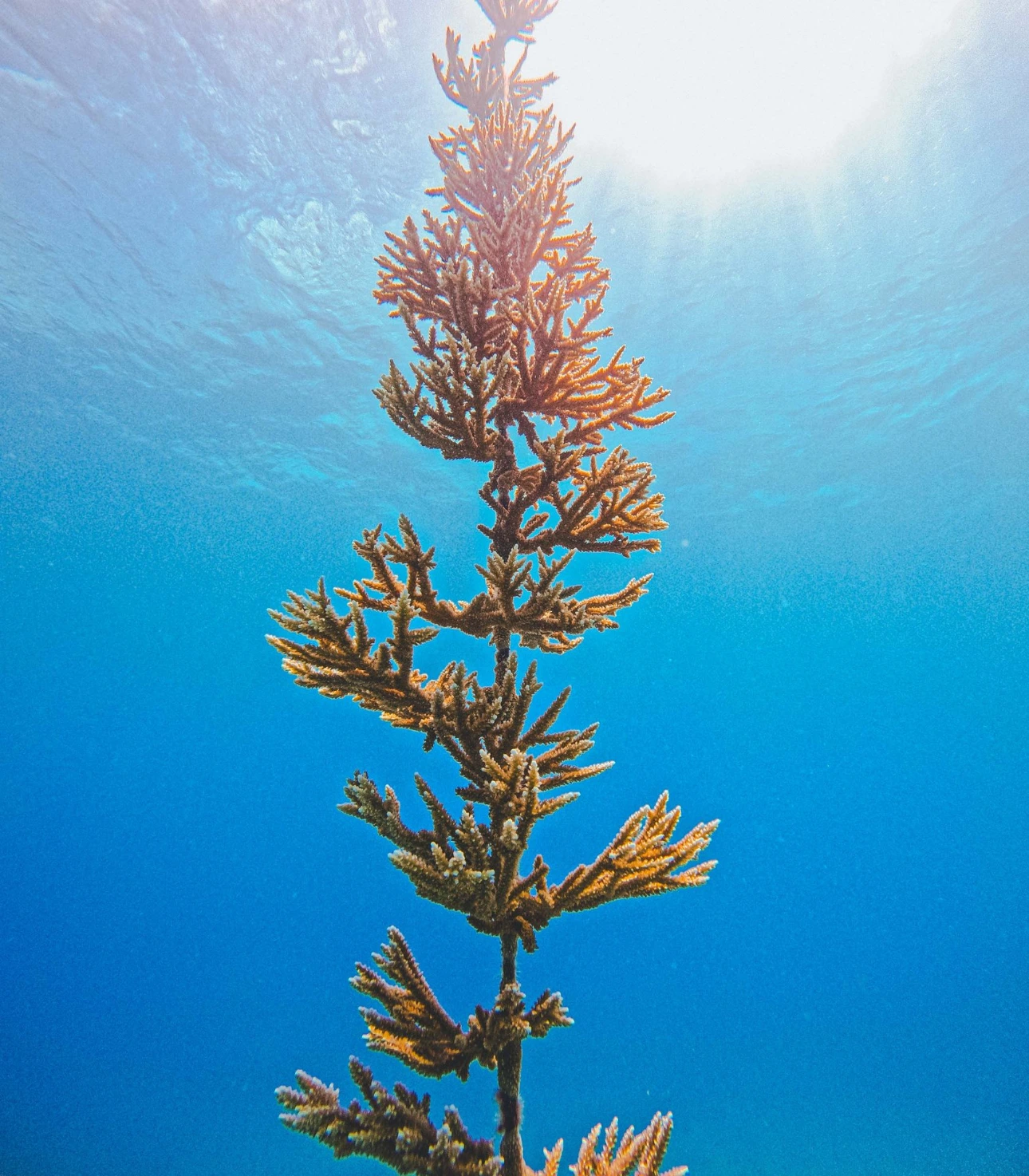
Image caption: Nursery Rope.
Local Homeowners and Community Support Helped Launch AnuBlue’s First Coral Nurseries
The inception of AnuBlue began when two marine scientists met with Antiguan homeowners and entrepreneurs who shared deep concerns about the state of Antigua’s reefs. With the support of families who had owned homes on the island for generations and witnessed the decline of its coastal waters over decades, AnuBlue was formed to help reverse this trajectory. In 2021 the team of scientists, restoration experts, fisherfolk and other local divers installed AnuBlue’s first coral nurseries adjacent to Green Island and York Island.
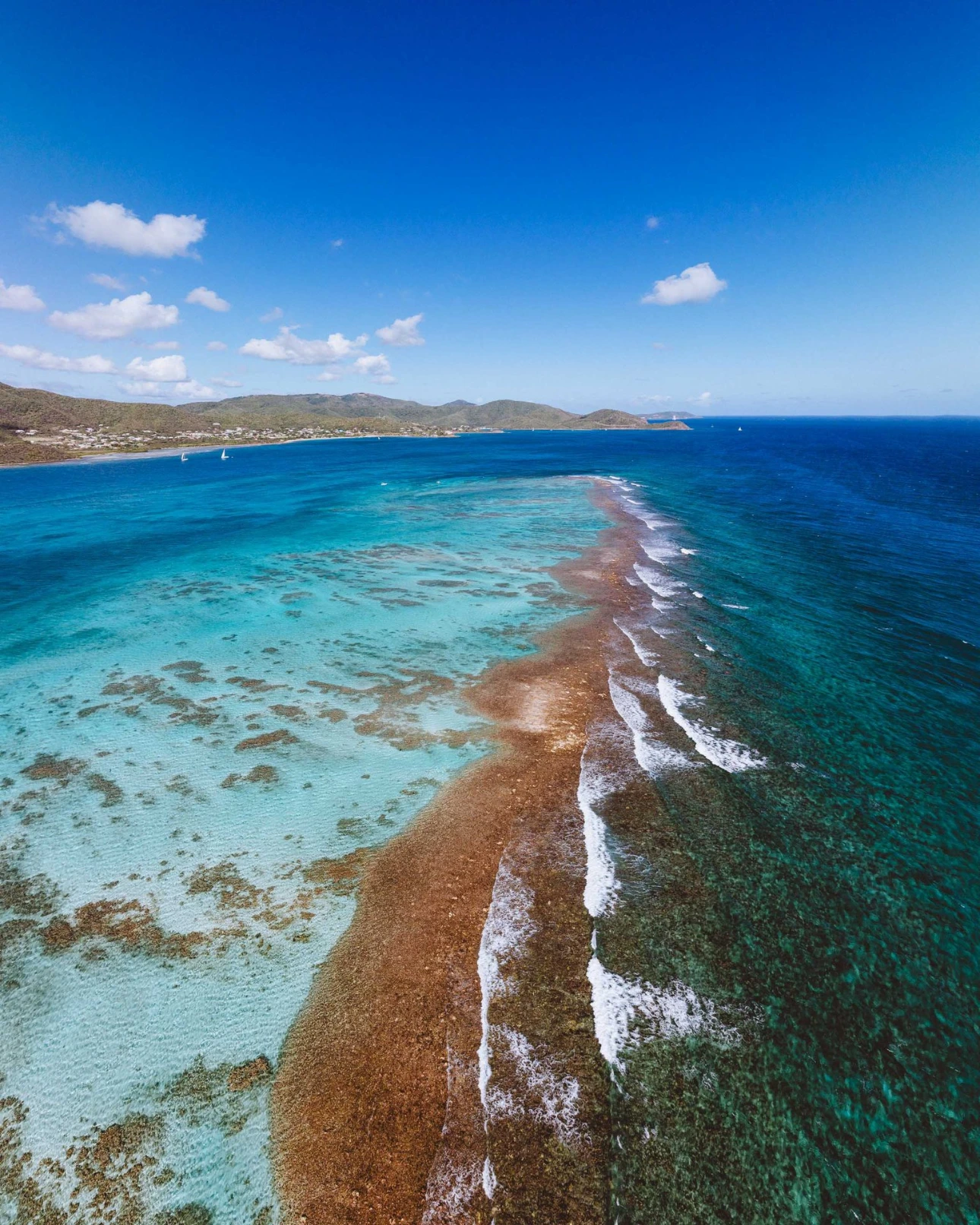
Image caption: Cadres reef.
5,800 Corals Planted This Year Across Four Nurseries
AnuBlue now runs four nurseries at Jumby Bay, Cades Reef, and two sites around Green Island, where the team is currently growing 14 coral species under a permit that allows for work with 17 species. Of those currently being grown, five are critically endangered.
It is the largest coral restoration effort in Antigua, with 5,800 corals planted this year alone and 2.3 acres restored to date.
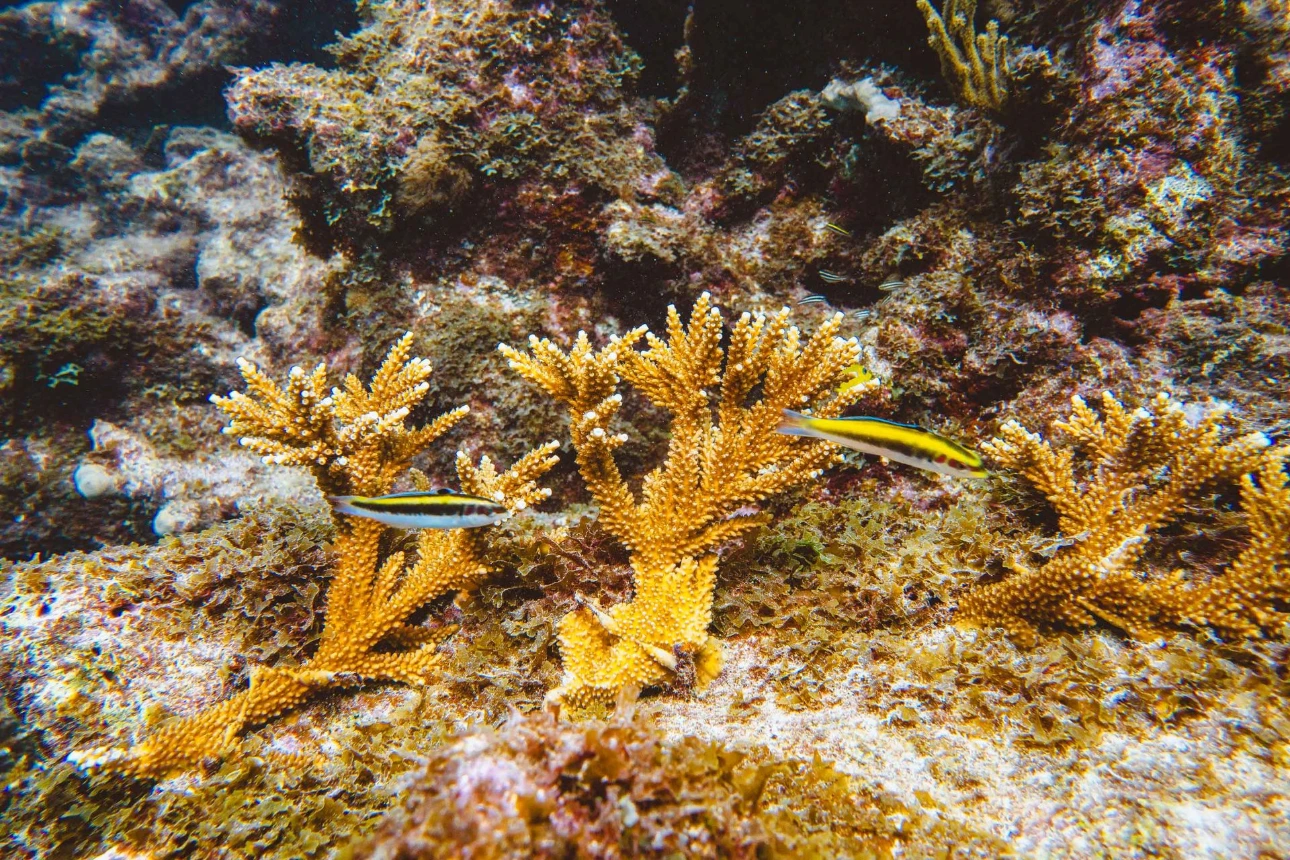
Image caption: Coral Outplants.
Growing Coral in Nurseries and Replanting It on Damaged Reefs
Coral restoration is complex work, but the concept is straightforward. Small fragments are taken from healthy parent colonies and grown in underwater nurseries, where they're protected while they mature. Once they're large enough, the team outplants them onto degraded reefs nearby and monitors them over time to track which corals are thriving.
AnuBlue also places corals from genetically distinct colonies, known as genets or genotypes, close together on purpose. During spawning season, corals of the same species can exchange genetic material, producing offspring with greater genetic diversity and potentially more resilience to future stress.
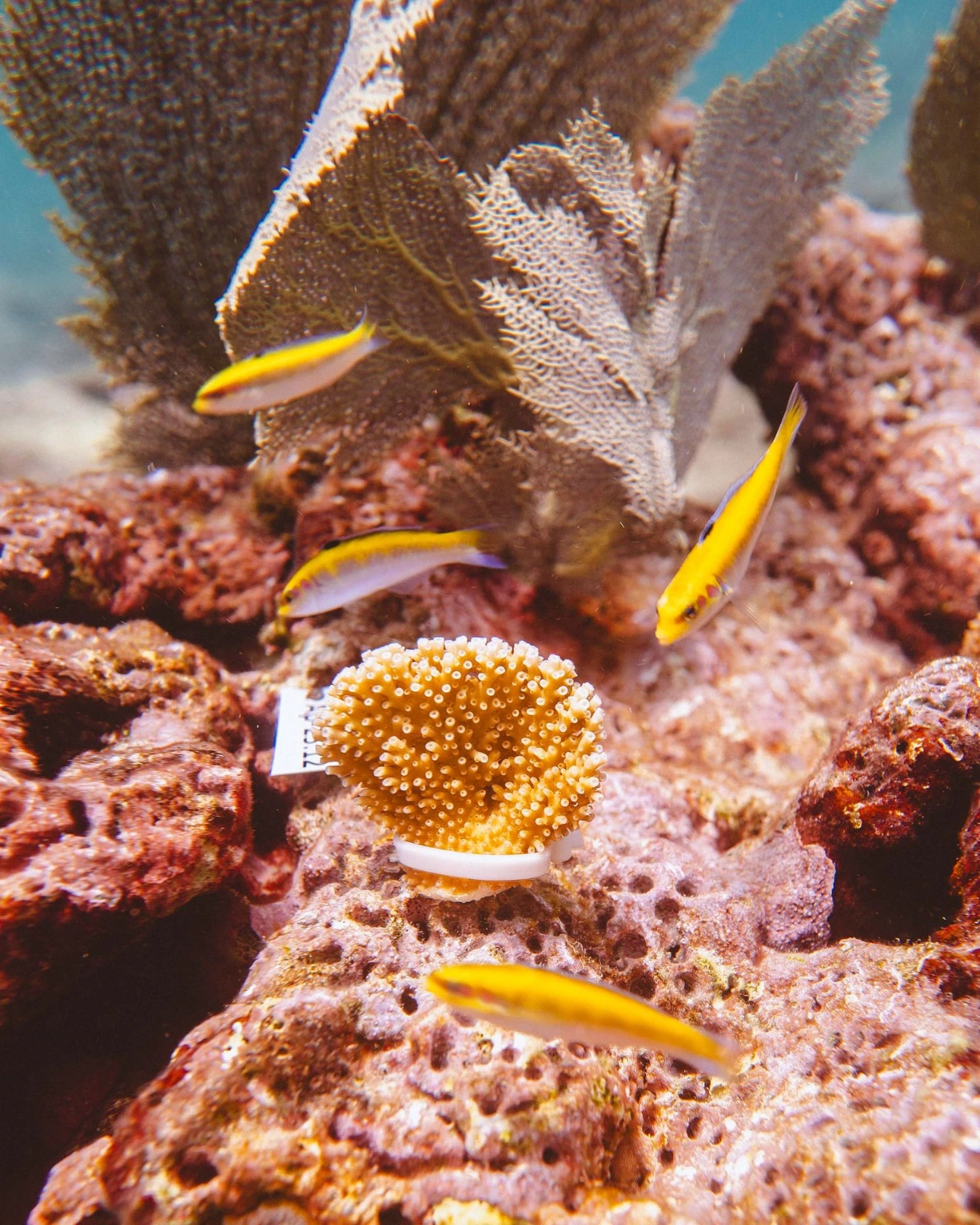
Image caption: Coral Outplants.
Propagating Heat-Tolerant Corals That Survived Bleaching
Two years ago, a severe bleaching event hit the world, with Antigua and Barbuda being no exception. Warming water pushed corals past their limits, and AnuBlue's nurseries kept only about 30% of their stock.
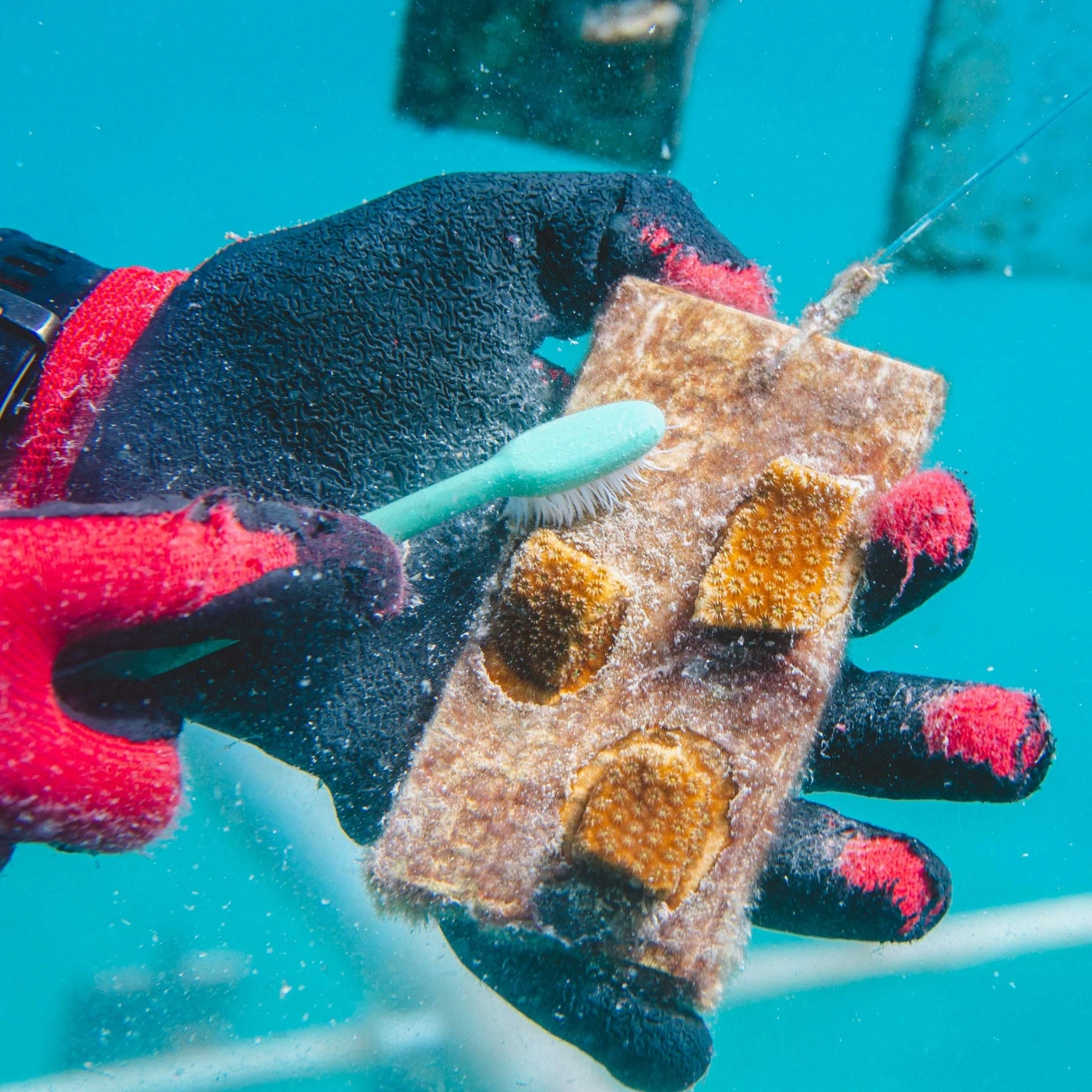
Image caption: Cleaning boulder corals tiles.
AnuBlue's scientists realized the corals that survived had something the others didn't. The team geotagged those heat-tolerant colonies and rebuilt the program around those genotypes, and Shannon says they have flourished since. She described the bleaching event as a blessing in disguise, because it showed the team exactly which corals are best equipped for warming waters.
Coral-Covered Sculptures Are Turning Bare Sand Into Reef Habitat at Cades Reef
Cades Reef on Antigua's south coast is Shannon's favourite site. Snorkelers weave between small reef mounds before reaching open, sandy patches, and those sandy areas are where AnuBlue has installed a series of rebar sculptures, designed by a local artist River Andrews. The structures curve and loop in lines designed to mirror the movement of water across the seafloor, with coral fragments attached all along them.
Sandy areas give coral very little to attach to and give fish very few places to shelter. AnuBlue found that coral growing on rebar performs especially well in these spots, and as the corals grow, the sculptures will fill in with crevices and hiding places for groupers, eels, and juvenile fish. Over time, bare sand becomes new reef habitat that supports the surrounding ecosystem.
The sculptures also give snorkelers something to explore while showing what restoration looks like in progress.
Before placing a single fragment at Cades, AnuBlue invited fisherfolk, hotel managers and tour operators into meeting spaces to talk through the project and help choose the location. Giving the people who bring visitors to the reef a say in where it would grow has built long-term community engagement and support for the project as it continues to develop.
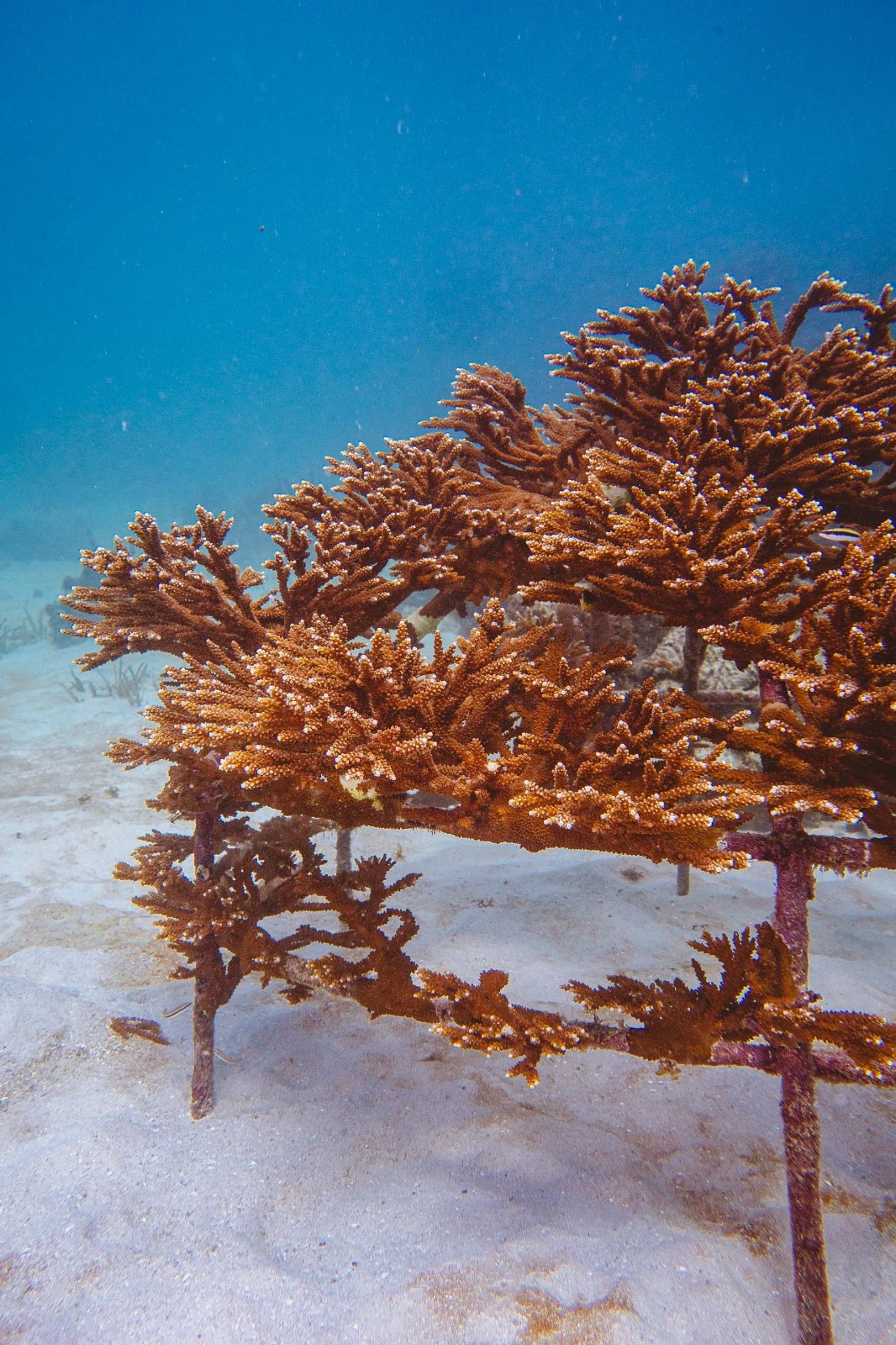
Image caption: Rebar domes.
Fully Subsidized Swimming Lessons Connect Local Youth to the Reef
AnuBlue's restoration work is supported by research, including water quality testing, shark tagging, and whale monitoring, since a reef's health depends on the wider ecosystem around it. The team also runs community programs such as subsidized swimming lessons, which recently took a group of local Girl Guides from their first strokes to snorkeling over a coral nursery.
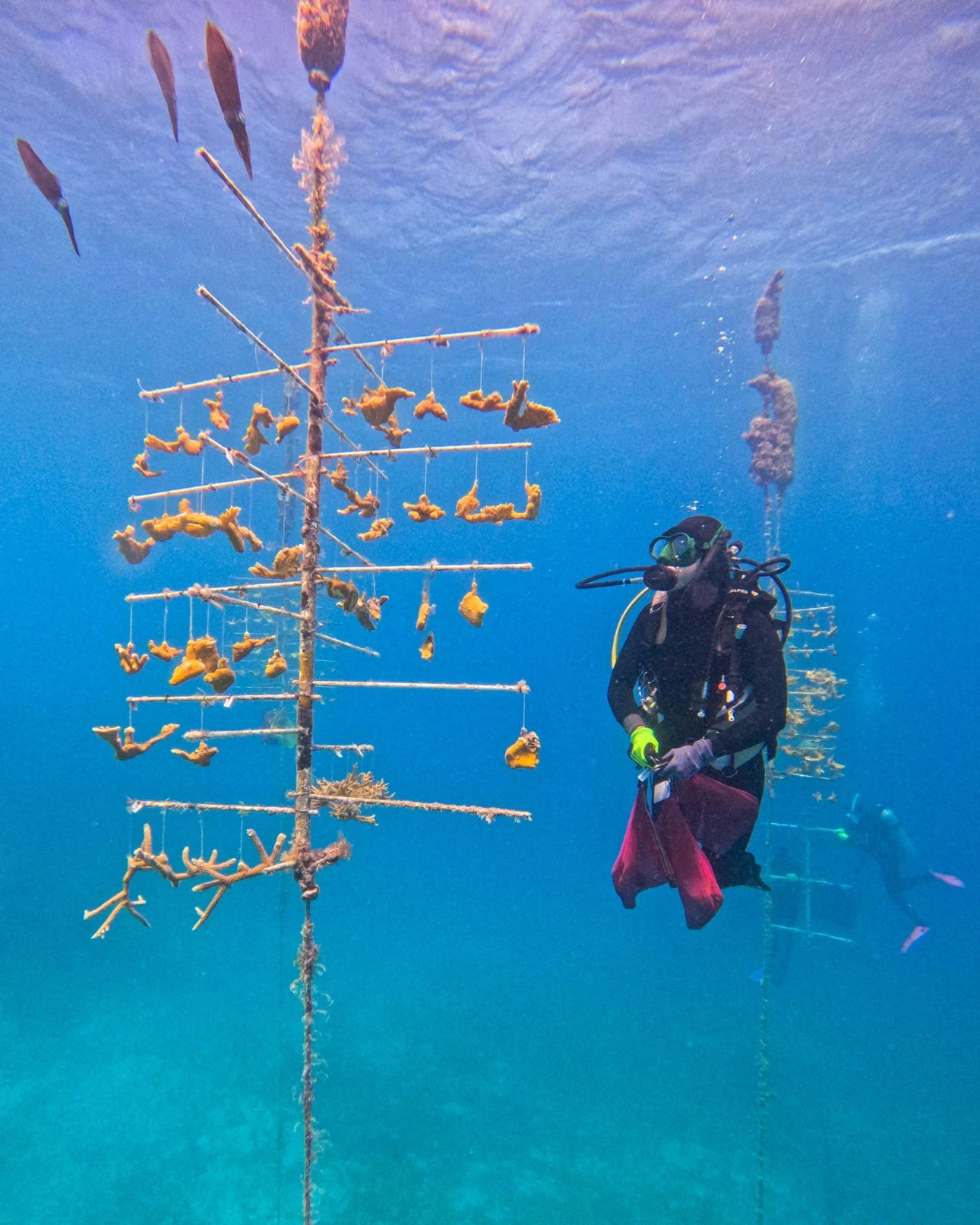
Image caption: Nursery trees.
Shannon says that when visitors snorkel over AnuBlue's showcase nursery, donations tend to follow. When people can see restoration with their own eyes, they're far more likely to support it.
From the nurseries at Green Island to the sculptures at Cades Reef, AnuBlue is showing what's possible when a community comes together to give a reef a second chance.
Tourism-Enabled Conservation
Antigua’s tourism industry has an opportunity to play a greater role in supporting ocean conservation. Bright Ocean Tourism is exploring ways to connect resorts, tourism businesses, and ocean conservation organizations through programs that give visitors and local residents meaningful opportunities to support conservation while helping direct funding toward organizations doing work in the ocean.
For resorts and ocean conservation organizations interested in exploring tourism-enabled conservation opportunities, reach out to us through Bright Ocean Tourism to learn more.
If you are a business or organization with a positive relationship to the ocean and are looking for marketing services, contact us today to see how we can help share your story and grow your impact.